A grey nomad’s guide to crossing Australia’s most famous stretch of road
For many grey nomads, crossing the Nullarbor Plain isn’t just another drive, it’s a rite of passage. It’s one of those trips people talk about for years before they do it, and for good reason. The Nullarbor strips travel back to basics. What you get is space, silence, and a sense of scale that’s hard to find anywhere else in Australia.
This stretch of country suits caravaners who are comfortable driving reasonable distances and doing a little bit of forward planning. If you want powered sites overnight, station stays are available along the way. If you’re set up to stay off-grid, it’s easier and cheaper.
We stayed for 1 night at Cocklebiddy for $45, and that was for only power, there was a heat wave at the time 46 degrees, we needed the A/C.
The Nullarbor also carries a strong sense of history and achievement. Towing a van across one of the world’s great treeless plains feels like a milestone. It’s not difficult in the modern sense, but it still demands respect. You’re crossing a remote part of the country where preparation matters, and that adds meaning to the journey.
Planning
For most travellers, the Nullarbor crossing is generally marked like this:
- Start (east to west): Ceduna, South Australia
- End (east to west): Norseman, Western Australia
If you’re travelling the other way, then Norseman is considered the start and Ceduna the finish.
According to Google maps, this is about 1,200Km.
While the Nullarbor Plain itself doesn’t neatly line up with town boundaries, these two towns are widely accepted by caravaners and grey nomads as the practical bookends of the journey. Both sit on the Eyre Highway
Road Conditions
In a word, perfect, better in fact than many places closer to bigger cities. Trucks will be no problem, if you are slower than them, they will just go around, the road is plenty straight enough for them to get around easy.
Fuel Stops
As you can see in the map, no problems, all the roadhouses we stopped at had fuel, food, toilets etc.
Lookouts
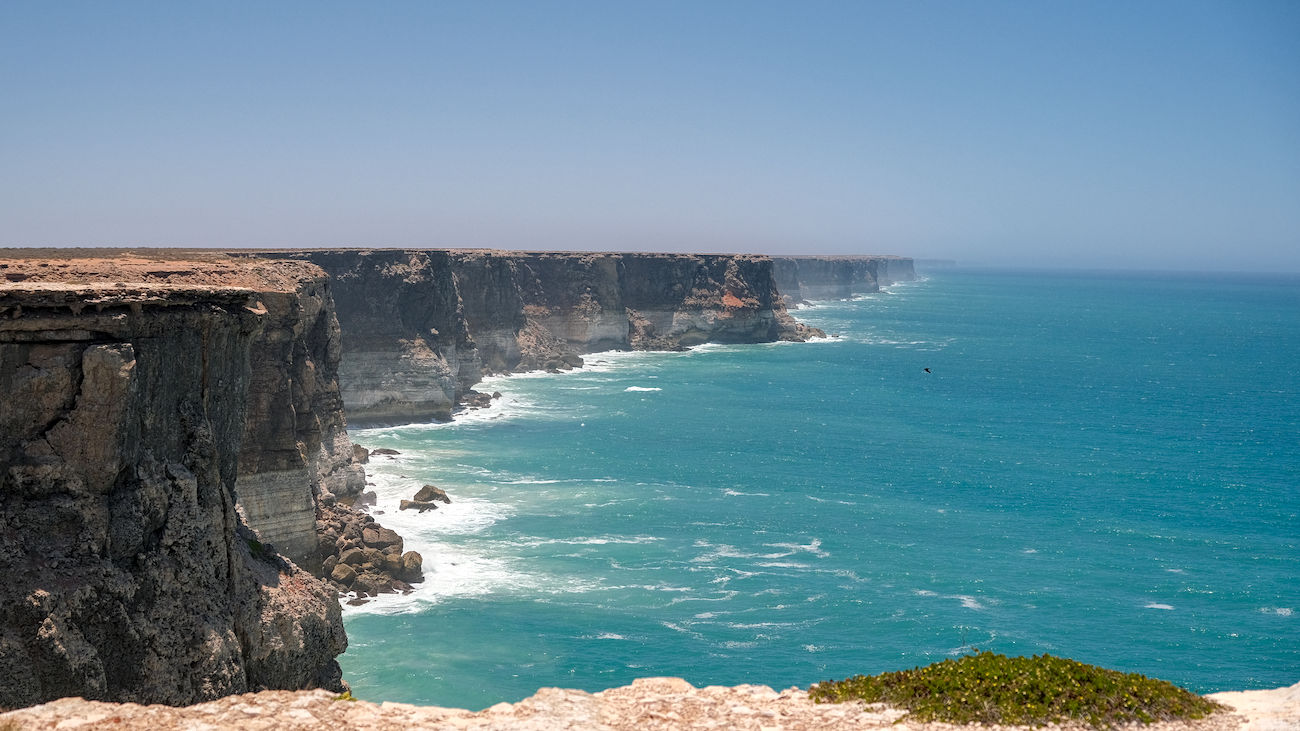
There are now 4, which we came across, the first one being Whalers lookout, which costs money $10 , if it was Whaling season, we would have paid, but since it wasn’t we passed, the other 3 lookouts are free.
We also noticed a few potential spots along the way that appeared to be closed, with signs and chains across the road.
Distance between stops
This part is really up to you. We aimed for around 300–400 km per day. That included stops for fuel, food, and the lookouts along the way.
It’s also worth being mindful of how monotonous the road can feel at times. Getting out, stretching your legs, and taking breaks makes a big difference.
Where to stay overnight
WikiCamps is your friend here. There are plenty of free camps along the way, and most are much the same. Nothing fancy, just a patch of ground set back from the road. No facilities.
Beware of the wind, when we went over the Nullarbor it was very windy every afternoon and at the campsites the bushes didn’t provide much shelter.
If you want power, toilets, and a bit more comfort, then you’ll need to stay at a station.
Border Crossing
This is one area where you need to be prepared. There are biosecurity checks in both directions, and you will be stopped. In short, no fresh fruit or vegetables are allowed.
To learn more have a look at our article State Border Food Rules
Dogs (Pets)
If you travel with a dog, 1080 baiting sometimes comes up when people talk about crossing the Nullarbor Plain. In online forums and Facebook groups, it can sound like a constant danger. Our experience, and that of many other caravaners travelling with pets, is that it’s no more dangerous than many other parts of the country.
When we crossed the Nullarbor, we don’t remember seeing any 1080 warning signs at all. That surprises some people, but it highlights an important point, baiting isn’t permanent or always active. It’s typically carried out in specific areas, for specific reasons, and often for limited periods. If there’s no active baiting at the time, there are no signs to see.
1080 baits are used across large parts of rural Australia, not just the Nullarbor. They’re mainly laid by pastoralist protecting livestock from wild dogs, along with government land management agencies running coordinated pest control programs. In some areas, conservation groups also use 1080 to reduce foxes and other feral predators that threaten native wildlife. It’s a regulated tool, used deliberately rather than casually.
That doesn’t mean the risk should be ignored. 1080 is deadly to dogs, and sensible precautions apply anywhere it’s used. Keeping dogs on leads, avoiding scrubby areas, and sticking to established camps and roadhouses significantly reduces the chance of a problem. These are habits most responsible dog owners already follow when travelling through rural Australia.
In reality, the Nullarbor isn’t uniquely dangerous for dogs. Many travellers cross it every year with their pets and never encounter an issue. Like much of remote travel, it comes down to awareness of your surroundings and making sensible decisions.
Some Pics Along The Way


Thanks for reading Caravaning The Nullarbor – What to Expect. Shadow, the van, and the two of us will catch you at the next campsite.
If you enjoy this kind of content, you can sign up for the newsletter. You’ll get an email when a new post goes live (usually around 4–6 a month), plus a monthly wrap-up.

Leave a Reply